Duc Thanh School Phan Thiet – A Quiet Historical Landmark You Should Not Miss
Amid the gentle rhythm of life on the coast of Phan Thiet, there exists a place that does not compete with the vibrant colors of tourism, nor does it try to impress at first glance—yet it lingers deeply in the hearts of those who visit. That place is Duc Thanh School.
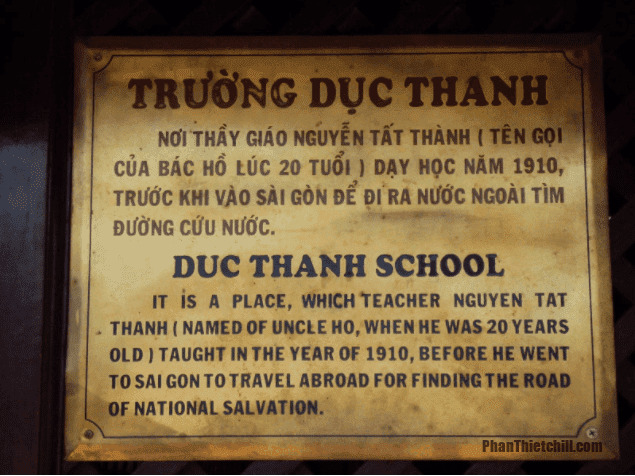
This is not merely a tourist attraction. It is a fragment of history, a quiet witness to the early footsteps of Ho Chi Minh—then known as Nguyễn Tất Thành—before he embarked on his lifelong journey to seek independence for Vietnam. More than anything, it is a place that reminds us that true value does not need to be loud to be deeply felt.
Where is Duc Thanh School? A Complete Visitor Guide
Located at 39 Trưng Nhị Street, Đức Nghĩa Ward, Duc Thanh School sits peacefully beside the serene Cà Ty River. Unlike the bustling beaches of Mũi Né, this historical site offers a calm, reflective atmosphere.
The school is open daily from 7:00 AM to 5:00 PM, and entrance is completely free. Visitors traveling in groups can arrange guided tours through the nearby museum office. If you arrive by private vehicle, parking is available near the entrance, followed by a short walk into the grounds.
Finding the school is simple. Ask any local, and they will gladly guide you there—as if leading you not just to a destination, but to a meaningful encounter with the past.
Why Duc Thanh School Is a Must-Visit in Phan Thiet
Among the many attractions in Phan Thiet, Duc Thanh School stands apart. It is not a place for flashy check-ins or entertainment. Instead, it offers something far more lasting—an emotional and intellectual experience.
As you step through the modest wooden gate, you will encounter a space where time seems to have paused. Inside, carefully preserved artifacts remain:
- The wooden bed where Hồ Chí Minh once rested
- The classroom desks where he taught
- Everyday items such as tea sets and tools
Everything has been maintained in its original state, creating a quiet yet powerful connection between the present and the past.
A Living Story of History and Education
Built in 1907 during the Duy Tân Movement, Duc Thanh School was more than just a place for learning. It symbolized a progressive vision for education and national awakening.
The school was founded by prominent Vietnamese patriots, including Phan Chu Trinh, Huỳnh Thúc Kháng, and Trần Quý Cáp. Their goal was not only to educate but to cultivate independent thinking and a deep sense of national identity.
At a time when traditional education was rigid and limited, Duc Thanh introduced modern teaching methods—focusing on critical thinking, moral values, and patriotism. It became one of the most progressive educational institutions in Bình Thuận at the time.
“History does not only live in books—it lives in places like Duc Thanh School.”
After 1975, the school was carefully restored. Today, its wooden structures, classrooms, and surrounding spaces remain preserved, allowing visitors to experience history in its most authentic form.

The Imprint of Nguyễn Tất Thành
What makes Duc Thanh School truly special is its connection to Nguyễn Tất Thành, who later became Hồ Chí Minh.
Here, he was remembered not as a political figure, but as a young teacher—simple, approachable, and deeply devoted to his students. His presence left a lasting impression on generations of learners.
It is remarkable to think that from this quiet corner of Phan Thiết, a journey of global significance quietly began.
Architecture – The Beauty of Simplicity
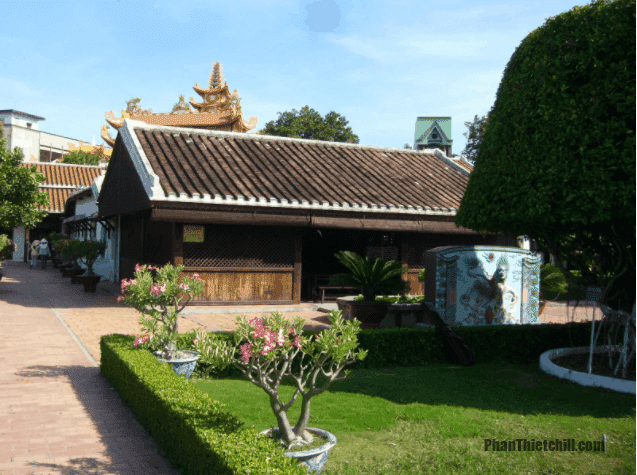
The architecture of Duc Thanh School reflects traditional Asian design, emphasizing harmony, simplicity, and functionality.
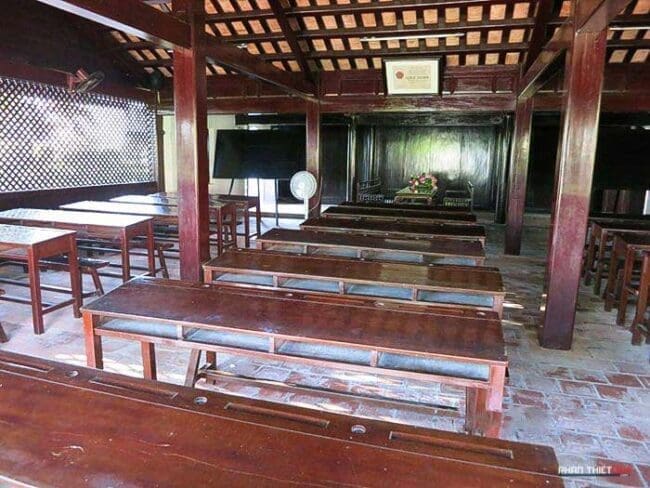
The main classroom building, often considered the heart of the school, features red-tiled roofs, wooden frames, and open spaces that invite light and air. Inside, blackboards and wooden desks recreate the atmosphere of early 20th-century education.
“In the stillness of Duc Thanh School, the past speaks softly but powerfully.”
Nearby stands Ngọa Du Sào, a small yet meaningful structure associated with Nguyễn Thông. This was once a gathering place for poets and intellectuals, where discussions about literature and national issues took place. Though modest in size, it carries a profound cultural spirit.
Another notable feature is the ancient well, still clear and fresh after more than a century. It is not only a source of water but also a symbol of continuity and resilience.
In the garden, a starfruit tree planted over 100 years ago continues to bear fruit. Visitors often see it as a living connection to the past—something tangible yet deeply symbolic.
A Different Kind of Travel Experience
From a travel perspective, Duc Thanh School is not a place that overwhelms you at first sight. Instead, its beauty unfolds gradually.
As you walk through the grounds, you begin to notice:
- The rare stillness in the air
- The respectful, almost sacred atmosphere
- The sense of physically “touching” history
- The carefully maintained green spaces
This is not a destination for rushed travelers. It is for those who are willing to slow down, to observe, and to feel.
Visitor Etiquette and Cultural Respect
As a historical site, Duc Thanh School requires visitors to maintain respectful behavior. Silence is encouraged to preserve the tranquil atmosphere. Touching artifacts or altering the surroundings is not permitted.
Visitors should avoid littering, refrain from bringing food inside, and respect the integrity of the site. Thoughtful behavior ensures that this cultural heritage can be preserved for future generations.
Nearby Attractions Worth Exploring
A visit to Duc Thanh School can easily be combined with other nearby destinations in Phan Thiết.
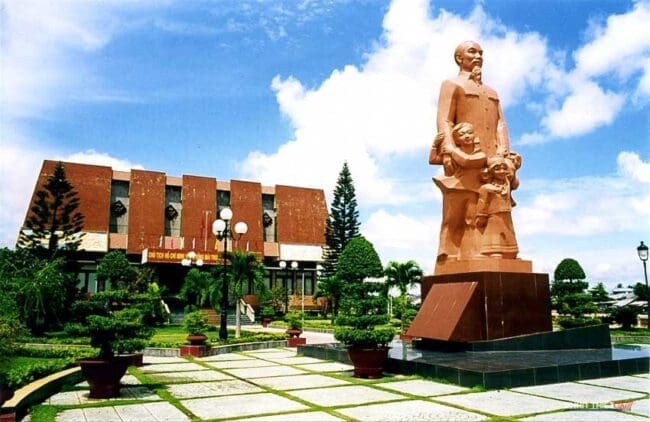
Right next door is the Hồ Chí Minh Museum Phan Thiết, which offers deeper insight into Hồ Chí Minh’s life and legacy.
A short distance away lies Doi Duong Beach, a popular spot for both locals and tourists to relax, swim, and enjoy seaside activities.
You can also visit Van Thuy Tu Temple, a unique cultural site dedicated to the Whale God, reflecting the spiritual beliefs of coastal communities.
Together, these destinations create a balanced itinerary that blends history, culture, and relaxation.
Suggested Itinerary
A simple half-day itinerary could begin in the morning with Duc Thanh School, followed by the nearby museum. After lunch featuring local seafood, the afternoon can be spent at Đồi Dương Beach.
It is a short journey, yet one filled with depth and meaning.
Conclusion: A Place to Feel, Not Just to See
Duc Thanh School is not for those seeking excitement or spectacle. But for travelers who wish to understand Vietnam’s history, to feel the depth of its culture, and to find a quiet moment within their journey, it is an essential stop.
Some places impress you instantly. Others stay with you long after you leave. Duc Thanh School belongs to the latter.
It is not just a destination—it is a memory, gently waiting to be felt.
FAQ
Where is Duc Thanh School located?
Duc Thanh School is located at 39 Trung Nhi Street in Phan Thiet, right next to the peaceful Ca Ty River.
Is Duc Thanh School free to visit?
Yes, entrance to Duc Thanh School is completely free, making it one of the most accessible historical attractions in Phan Thiet.
Why is Duc Thanh School famous?
It is known as the place where Hồ Chí Minh once taught before beginning his journey abroad. This historical connection makes it a meaningful cultural site.
What can you see at Duc Thanh School?
You can see preserved classrooms, wooden furniture, teaching tools, and personal items associated with Hồ Chí Minh.
When is the best time to visit Duc Thanh School?
Morning or late afternoon is ideal due to cooler weather and a quieter atmosphere.
Is Duc Thanh School suitable for tourists?
Yes, especially for travelers interested in history, culture, and authentic local experiences rather than entertainment.
Do visitors need to follow any rules?
Yes, visitors should respect the site by keeping quiet, not touching artifacts, and maintaining cleanliness.