Discover Binh Thuan Dragon Fruit Farms in Phan Thiet – Mui Ne: 1st Plant
When people think about Phan Thiet and Mui Ne, they most immediately imagine beaches, sand dunes, seafood, or luxury resorts. But beyond tourism, there is another symbol deeply connected to this coastal land — dragon fruit.
For decades, Binh Thuan has been known as the “dragon fruit capital” of Vietnam. Endless farms stretching along the roads, glowing fields illuminated at night, and generations of local farmers have turned this fruit into more than just an agricultural product. It has become part of the region’s identity.

From the perspective of PhanThietChill, dragon fruit is not simply something visitors eat during a trip. It is one of the clearest ways to understand the culture, economy, and daily life of Phan Thiet and Mui Ne.
This article explores:
- The history of Binh Thuan dragon fruit
- Why the region became Vietnam’s largest producer
- The unique farming culture behind it
- Real travel experiences visiting dragon fruit farms
- And whether this experience is actually worth adding to your itinerary
Why Is Binh Thuan Famous for Dragon Fruit?
Among all provinces in Vietnam, Binh Thuan has become the most recognized region for dragon fruit cultivation. The combination of dry climate, sandy soil, strong sunlight, and coastal weather created nearly ideal conditions for the plant to thrive.
Unlike many tropical fruits that require abundant rainfall, dragon fruit grows surprisingly well in hot and dry environments. This makes Phan Thiet and Mui Ne particularly suitable for large-scale farming.
Today, dragon fruit farms can be found across:
- Ham Tien
- Mui Ne
- Ham Thuan Nam
- Ham Thuan Bac
- Bac Binh
Driving through these areas, especially at night, visitors will notice something unusual:
thousands of glowing lights stretching across the countryside.
For many travelers, this becomes one of the most unforgettable images of Binh Thuan.

>>> See more: Top 4 Mui Ne food you must try
The Origin of Dragon Fruit in Vietnam
Although dragon fruit is strongly associated with Vietnam today, it did not originate there.
Dragon fruit belongs to the cactus family and is believed to have originated in Central and South America. It was later introduced to Southeast Asia through trade and agricultural exchange.
Over time, Vietnamese farmers adapted the plant exceptionally well, particularly in Binh Thuan Province.
What makes Binh Thuan special is not simply that dragon fruit grows here, but that local farmers transformed it into a large-scale agricultural identity.
From a relatively small crop, dragon fruit gradually became:
- a major export product
- an economic driver
- a symbol of local agriculture
- and eventually a tourism image associated with Phan Thiet
Why Dragon Fruit Became Important to Binh Thuan
For many years, Binh Thuan’s dry climate made agriculture difficult.
Traditional farming methods often struggled due to:
- low rainfall
- sandy land
- harsh heat conditions
Dragon fruit changed that story.
The plant adapted well to the environment and provided farmers with:
- higher income
- stable export opportunities
- better economic sustainability
Today, Binh Thuan produces hundreds of thousands of tons of dragon fruit annually and exports to many international markets.
The fruit has become one of Vietnam’s most recognizable agricultural products globally.
But behind the economic success lies something deeper:
a farming culture built through patience, experimentation, and adaptation over generations.
The Meaning Behind the Name “Dragon Fruit”
In Vietnamese, dragon fruit is called “Thanh Long.”
The English name “dragon fruit” comes from the appearance of the fruit itself:
- bright pink or red skin
- green scales resembling dragon scales
Under sunlight, the fruit has a striking appearance that feels almost surreal.
For international visitors seeing dragon fruit farms for the first time, the visual impact is often stronger than expected.
At night, entire farms glow under electric lights, creating a landscape that looks closer to science fiction than traditional agriculture.

The Unique Night Lighting System in Dragon Fruit Farms
One of the most fascinating parts of Binh Thuan dragon fruit farming is the lighting system.
Why are dragon fruit farms lit up at night?
The answer is both scientific and practical.
Farmers use artificial lighting to stimulate off-season flowering. By extending the light exposure, the plant produces fruit more consistently throughout the year.
This technique significantly increases:
- productivity
- harvest frequency
- export potential
For visitors, however, the experience feels magical.
Along highways between Phan Thiet and Mui Ne, thousands of lights create endless glowing fields across the dark countryside.
From a travel perspective, this has quietly become one of the most unique nighttime landscapes in southern Vietnam.
Visiting Dragon Fruit Farms in Phan Thiet and Mui Ne
Many tourists do not realize that dragon fruit farms are accessible to visitors.
Depending on the season and local farm owners, travelers may:
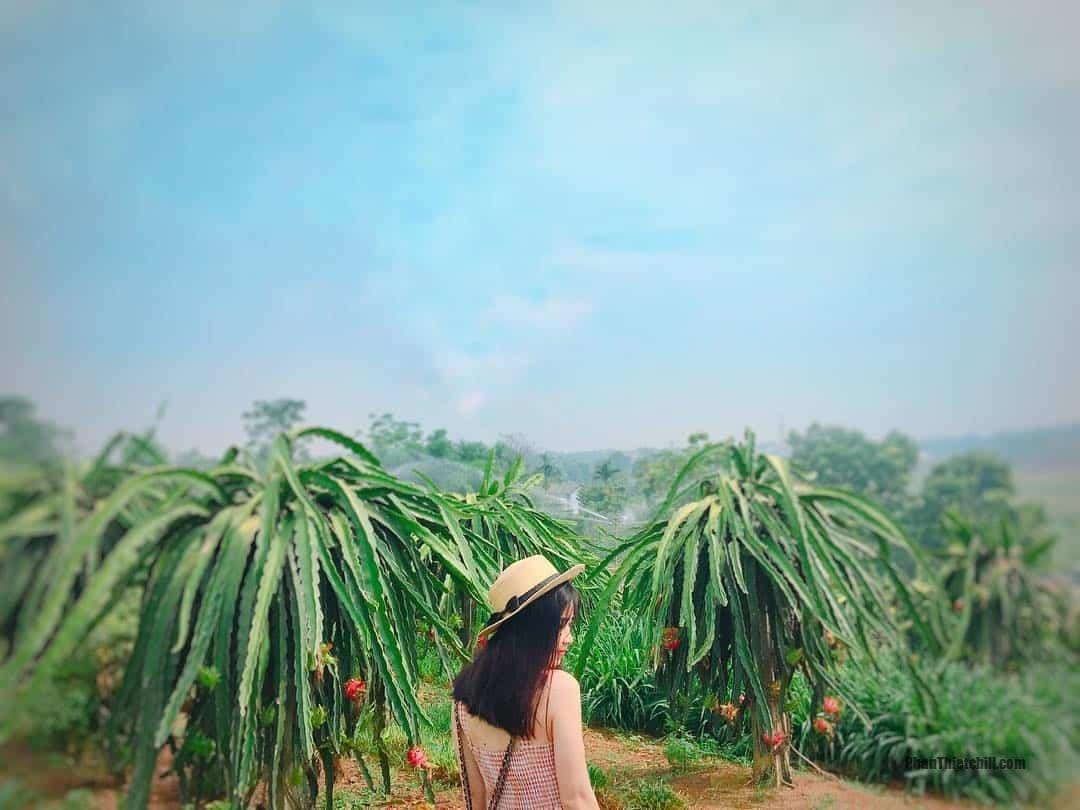
- walk through farms
- learn harvesting methods
- taste fresh fruit
- observe irrigation systems
- take photographs
- speak directly with local farmers
From the experience of PhanThietChill, visiting a dragon fruit farm offers a completely different perspective compared to beach tourism.
Instead of:
- resorts
- nightlife
- tourist attractions
You experience:
- local livelihoods
- rural landscapes
- authentic agricultural culture
This slower and more grounded experience is often appreciated by travelers seeking something beyond typical tourist activities.

The Best Time to Visit Dragon Fruit Farms
Dragon fruit is grown year-round, but certain periods are more visually impressive.
Best season:
- Around the summer months
- Harvest periods
- Evening lighting seasons
Best time of day:
Early morning
Cooler weather and softer light for photography.
Evening
Best for viewing illuminated farms.
If you visit during sunset or nighttime, the atmosphere becomes particularly memorable.
Different Types of Dragon Fruit in Binh Thuan
Not all dragon fruits are the same.
The most common varieties include:

White-flesh dragon fruit
- Most widely grown
- Mild sweetness
- Popular for export
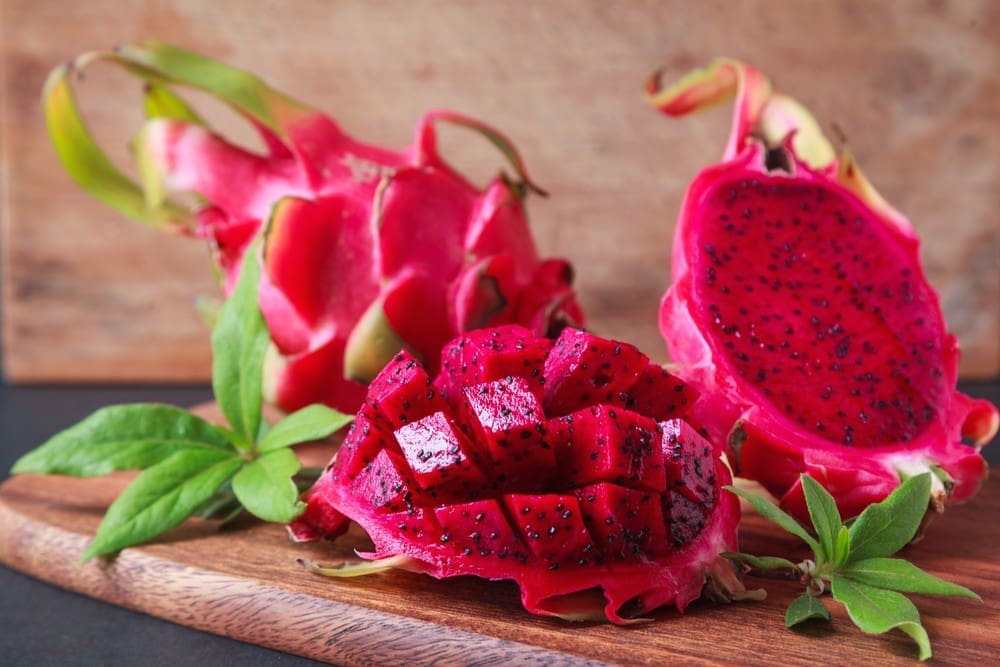
Red-flesh dragon fruit
- Sweeter
- Richer color
- More visually striking
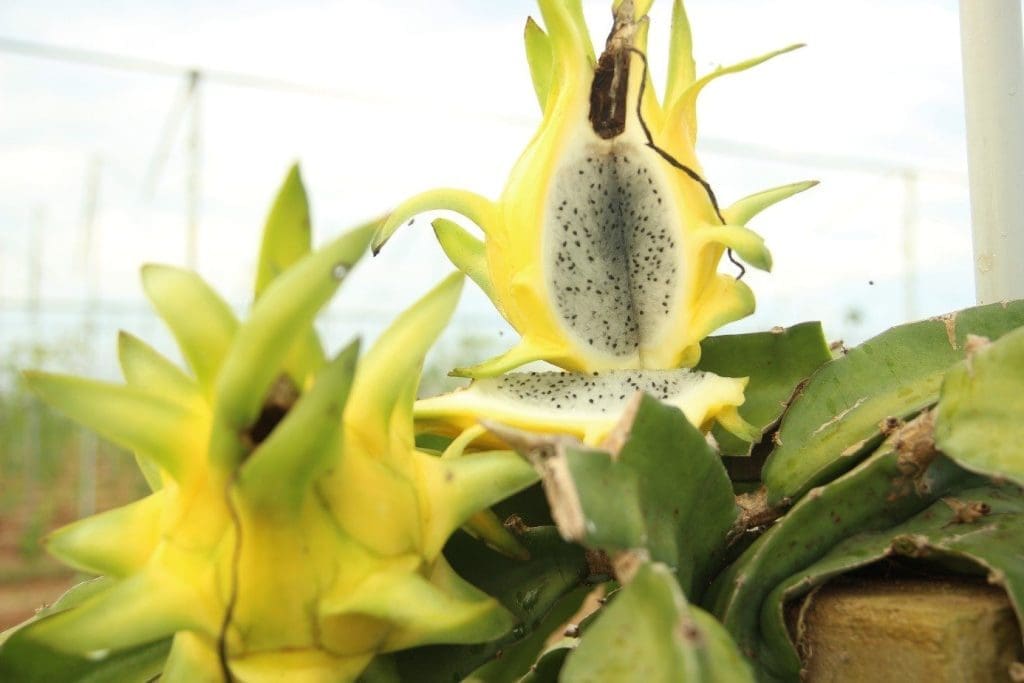
Yellow dragon fruit
- Less common
- Smaller size
- Sweeter taste
Many visitors are surprised to learn that taste can vary significantly depending on:
- growing conditions
- harvest timing
- farming techniques
Dragon Fruit and the Local Economy
Dragon fruit farming transformed many rural communities in Binh Thuan.
Over the years, it created:
- employment opportunities
- export revenue
- agricultural modernization
- infrastructure development
However, the industry also faces challenges:
- fluctuating export markets
- weather conditions
- price instability
- competition
- sustainability concerns
This creates a more realistic picture of the industry.
Dragon fruit is important to Binh Thuan — but farming is not always easy.

Sustainability and Modern Farming
In recent years, sustainability has become increasingly important.
Many farms are gradually adopting:
- VietGAP standards
- GlobalGAP certifications
- safer cultivation methods
- reduced pesticide use
- water-saving systems
These improvements are helping Vietnamese dragon fruit gain stronger positions in international markets.
For travelers interested in responsible tourism and local agriculture, this adds another meaningful layer to the experience.
What Makes the Experience Special?
The interesting thing about dragon fruit farms is:
They are not “spectacular” in the usual tourist sense.
There are:
- no luxury facilities
- no entertainment shows
- no large crowds
But the experience feels authentic.
You see:
- local people working
- real agricultural life
- landscapes shaped by climate and tradition
For many travelers, this becomes one of the most human experiences in Phan Thiet.
Is Visiting a Dragon Fruit Farm Worth It?
The answer depends on your travel style.
Suitable for:
- cultural travelers
- photographers
- slow travelers
- families
- Travelers interested in agriculture
- people looking for authentic experiences
Less suitable for:
- luxury-only travelers
- nightlife-focused visitors
- Travelers wanting fast entertainment
Dragon fruit farms are not designed as polished tourist attractions.
And that is exactly why some travelers love them.
Realistic Expectations
From a realistic perspective, visitors should understand:
- Not every farm is tourist-oriented
- facilities may be simple
- The weather can be very hot
- Some locations require transportation
But these imperfections are also part of the authenticity.
This is not a curated resort experience.
It is everyday life in rural Binh Thuan.

Travel Tips for Visiting Dragon Fruit Farms
What to prepare:
- sunscreen
- hat
- comfortable shoes
- water
- camera
Recommended:
- visit early morning or evening
- Combine with Mui Ne attractions
- Ask permission before entering farms
- Support local businesses respectfully
Places to Combine Nearby
A dragon fruit farm visit can easily fit into a half-day or full-day itinerary with:
- Mui Ne Sand Dunes
- Fairy Stream
- Poshanu Cham Towers
- Mui Ne Fishing Village
- Ong Dia Rock Beach
- local seafood restaurants
This combination gives travelers a broader understanding of the region beyond beach tourism.
>>> See more: Top 3 new specialties of Phan Thiet fish sauce
The Cultural Side of Dragon Fruit
What makes dragon fruit meaningful in Binh Thuan is not simply its economic value.
It reflects:
- adaptation to a harsh climate
- local resilience
- farming traditions
- community identity
For many families, dragon fruit farming spans generations.
Children grow up surrounded by farms, seasonal harvests, and agricultural routines that shape daily life.
This connection between land and people is something visitors can still feel today.
The Future of Binh Thuan Dragon Fruit
As tourism and agriculture continue developing together, dragon fruit farms may become an even more important part of experiential tourism in Phan Thiet.
However, preserving authenticity will remain important.
If over-commercialized, the experience could lose the very thing that makes it special:
It’s honesty and connection to real local life.
Final Thoughts – More Than Just a Fruit
Dragon fruit is not simply a specialty food in Binh Thuan.
It represents:
- history
- agriculture
- resilience
- culture
- and local identity
For travelers, visiting dragon fruit farms may not become the loudest or most luxurious memory of Phan Thiet.
But it often becomes one of the most genuine.
Sometimes, understanding a destination does not come from famous attractions.
It comes from seeing how local people live, work, and adapt to the land around them.
And in Binh Thuan, dragon fruit tells that story better than almost anything else.
Why is Lam Dong province (Binh Thuan) famous for dragon fruit?
Climate conditions for dragon fruit farming and is the largest producing region in Vietnam.
Can tourists visit dragon fruit farms in Phan Thiet?
Yes. Some farms welcome visitors for tours, photography, and fruit tasting experiences.
Why are dragon fruit farms lit up at night?
Farmers use artificial lighting to stimulate flowering and increase productivity during off-season periods.
What is the best time to visit dragon fruit farms?
Early morning and evening are the best times, especially during harvest seasons.
Is dragon fruit originally from Vietnam?
No. Dragon fruit originated in Central and South America but became widely cultivated in Vietnam over time.
Which dragon fruit type is sweetest?
Red-flesh dragon fruit is generally considered sweeter than white-flesh varieties.